
Compliance
Compliance you can follow, step by step.
Engineers like to see how each number was reached. PlutoHX shows every calculation step with its code reference.
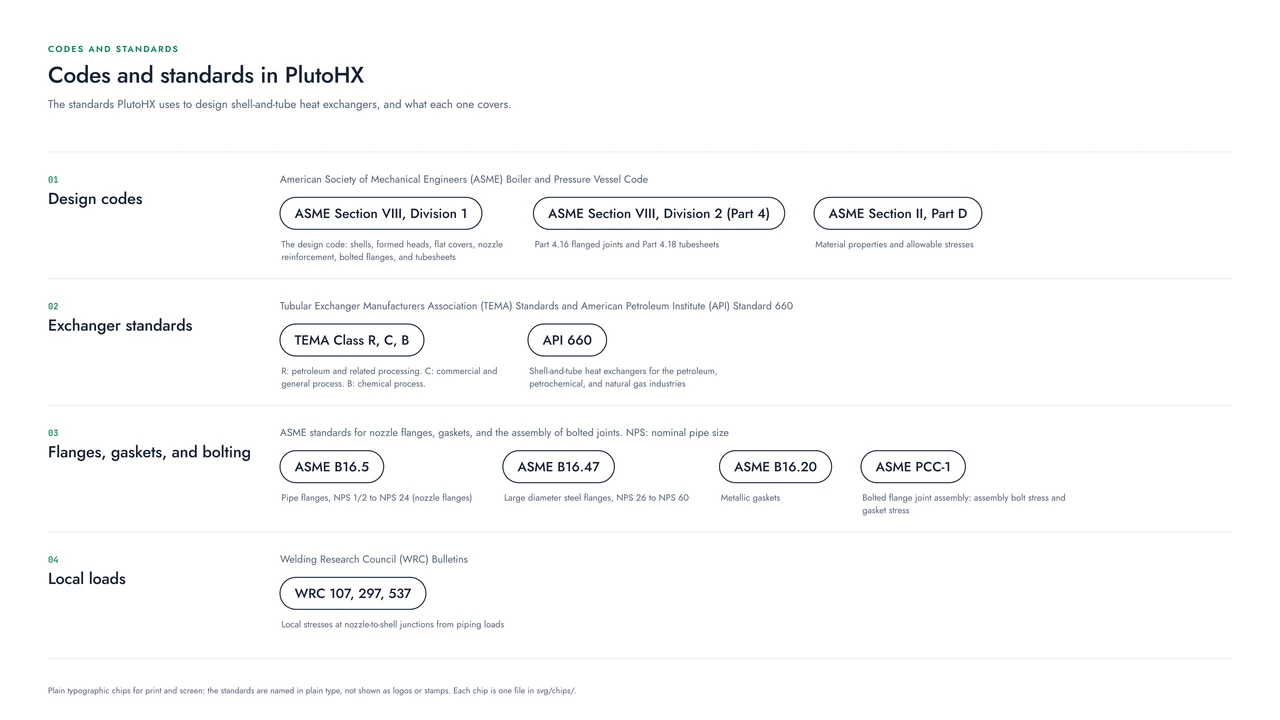
How the codes fit together
One design code, two exchanger standards, and their companions.
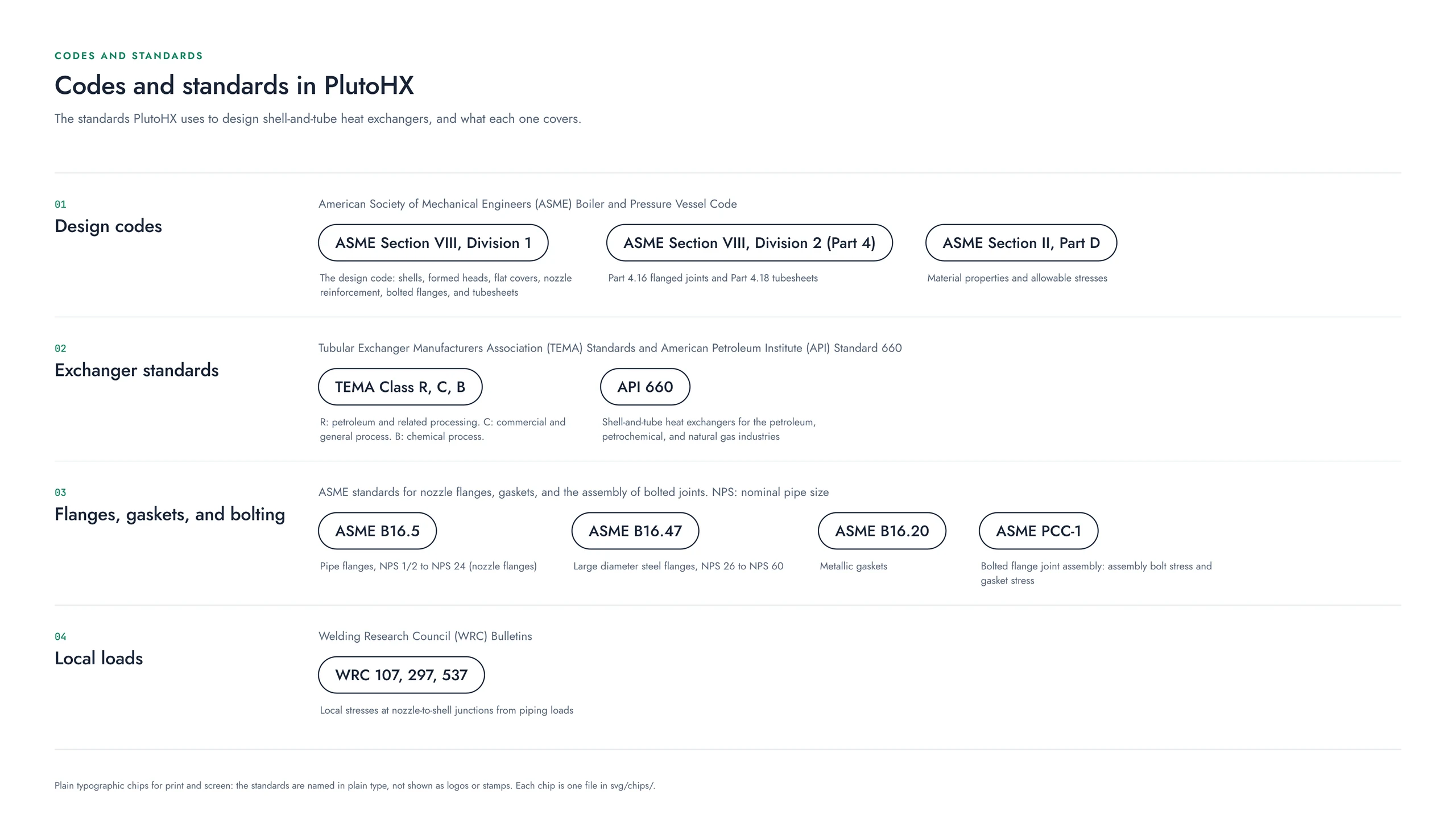
ASME Section VIII, Division 1 is the design code: it sets the rules for the shell, heads, nozzles, flanges, and tubesheets. The TEMA Standards set the construction of the exchanger, its classes, and its types. For the petroleum, petrochemical, and natural gas industries, there is API 660, the standard for their shell-and-tube heat exchangers.
Beside them sit the supporting standards for flanges, gaskets, bolted joints, nozzle loads, saddles, and materials, each named in full on its page.
In this section
A page for each code, and for the working behind the results.
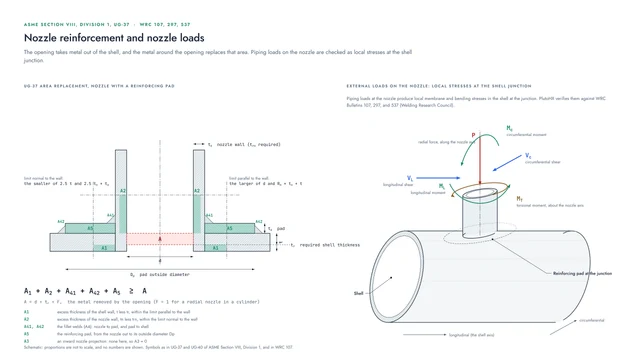 ASME Section VIII, Division 1The rules PlutoHX applies, grouped by the part of the exchanger they cover.
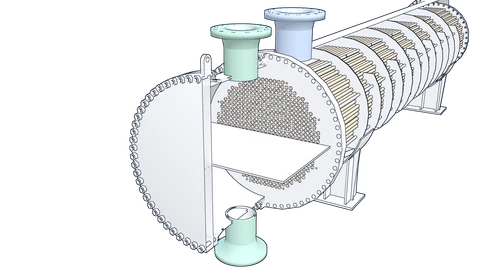 ASME Section VIII, Division 2Flanged joints and tubesheets through Mandatory Appendix 46.
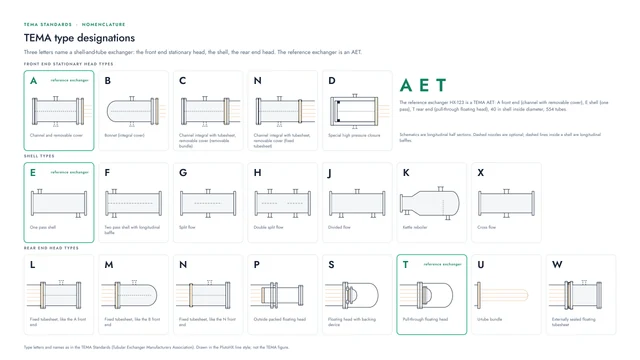 TEMA StandardsClasses R, C, and B, and every front end, shell and rear end type.
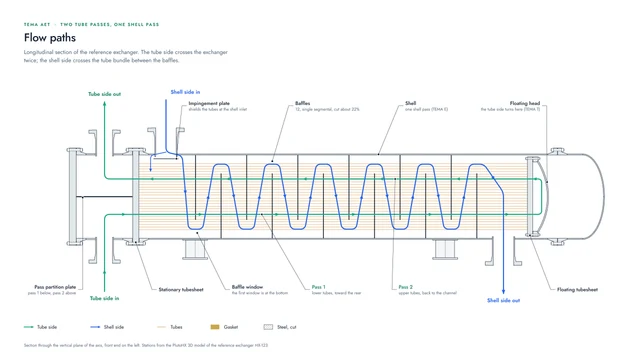 API 660The standard for shell-and-tube exchangers in the petroleum, petrochemical, and natural gas industries.
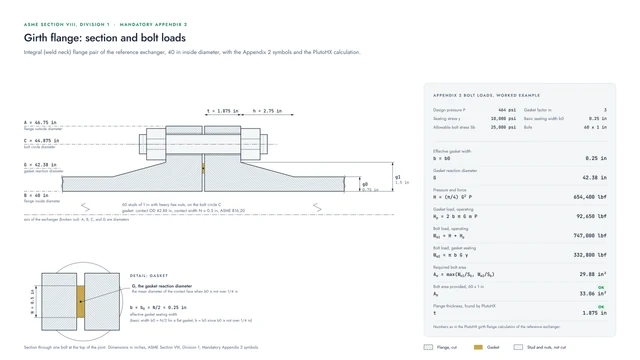 Supporting standardsFlanges, gaskets, bolted joints, nozzle loads, saddles, materials, and welding.
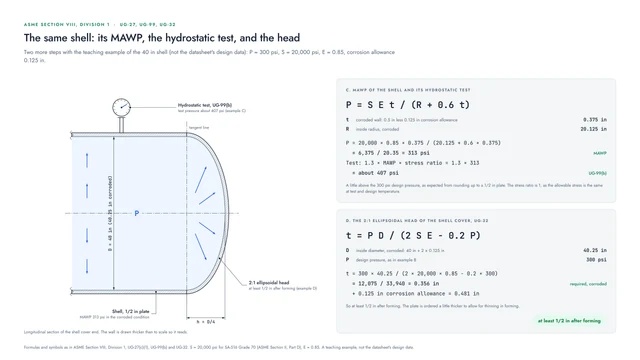 Worked examplesFive calculations with every formula, input, and step: a girth flange, a shell, its MAWP, a head, and a design change.
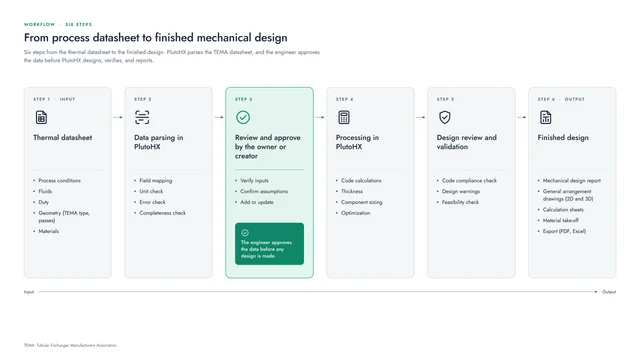 TransparencyHow each result can be traced, reviewed, and handed to an Authorized Inspector.
Coming Winter 2026
We would be glad to show you PlutoHX.
PlutoHX launches at the end of this year. A live demo shows how it fits the way your team works.
Visit us at the booth for a deep dive into PlutoHX.