
Guide
Fixed and sliding saddles.
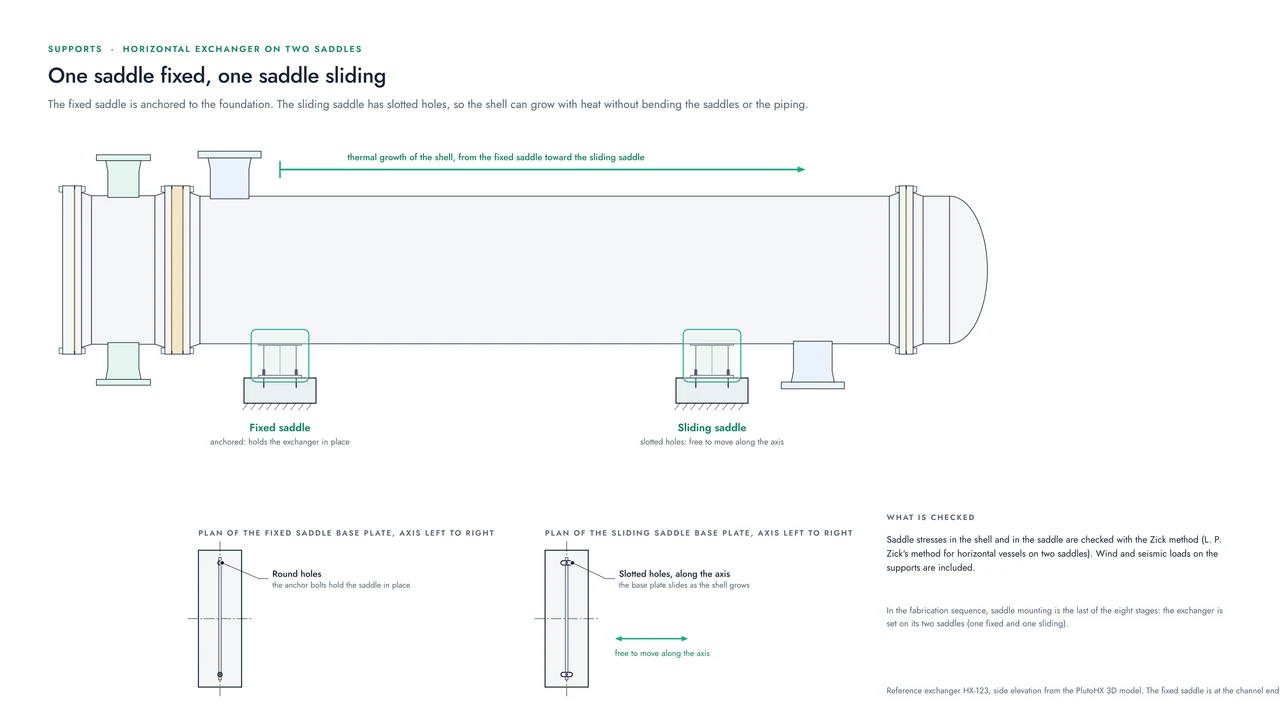
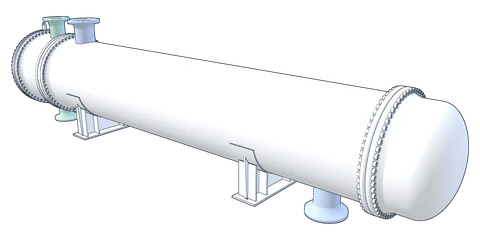
A horizontal exchanger stands on two saddles, and they do different jobs.
Why two kinds
Room for the shell to grow.
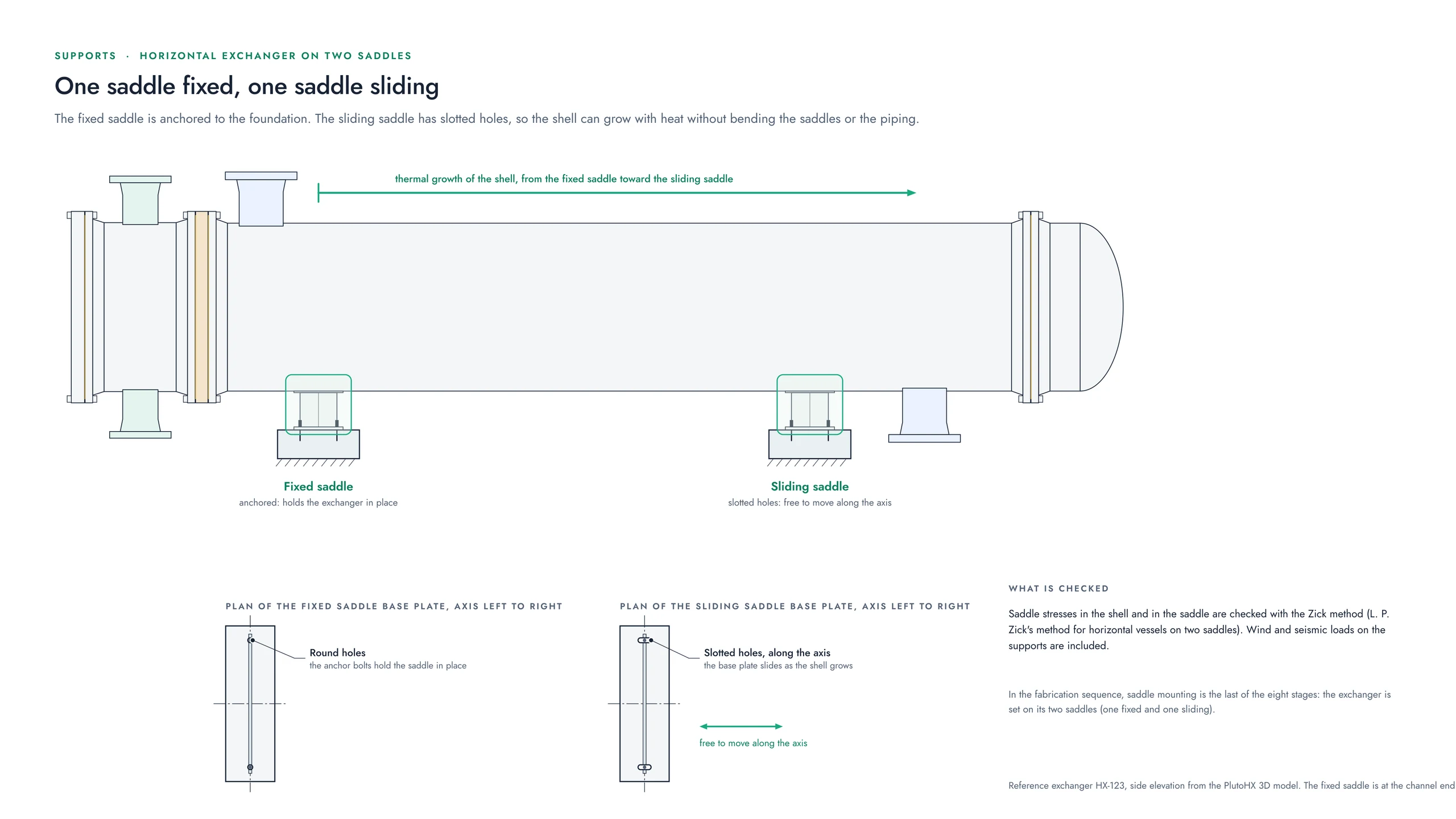
As an exchanger warms up, its shell gets longer. If both saddles were anchored, that growth would be held back at both ends. So one saddle is fixed to the foundation and the other is left free to slide along it.
On the reference exchanger
The last stage of the build.
Setting the exchanger on its saddles is stage 8 of the fabrication sequence. In the drawings on this site, the fixed saddle has round anchor bolt holes in its base plate and the sliding saddle has slotted ones.
Checking the supports
Zick, wind, and seismic.
Horizontal vessels on two saddles are checked with L. P. Zick’s method, and PlutoHX also takes the wind and seismic loads on the supports into account.
Coming Winter 2026
We would be glad to show you PlutoHX.
PlutoHX launches at the end of this year. A live demo shows how it fits the way your team works.
Visit us at the booth for a deep dive into PlutoHX.